
What’s Next?: #NotNCAAProperty and the Future of Student-Athlete Relations
- neconomides24
- Apr 25, 2021
- 3 min read
While star Michigan forward Isaiah Livers couldn’t make a sizeable impact on the court due to injury in the Wolverine’s NCAA tournament run, the senior made an impact off the court with a simple black t-shirt that read “#NotNCAAProperty”. He wasn’t the only athlete to take part in the protest, as Rutgers’s Geo Baker and Iowa’s Jordan Bohannan also wore the shirt, but the context of Liver’s clothing statement reveals the historical ramifications that led to this moment.
Over 20 years ago, Liver’s head coach and fellow Michigan alum Juwan Howard took a similar stance with his teammates. Howard was a part of the famed “Fab 5” Michigan team that forever changed college basketball and athletics in general. Howard, along with Chris Weber, Jalen Rose, Jimmy King, and Ray Jackson showed that freshmen could play at a high level in college basketball. They also showed that players wield power as well. The “Fab 5” were aware that they were bringing the University of Michigan and the NCAA millions of dollars off the back of their hard work and immense popularity, and they knew they were never going to see a penny from those merchandise sales. As a response, Michigan wore plain blue warm up t-shirts and sweatpants, and there wasn’t a Michigan logo in sight.
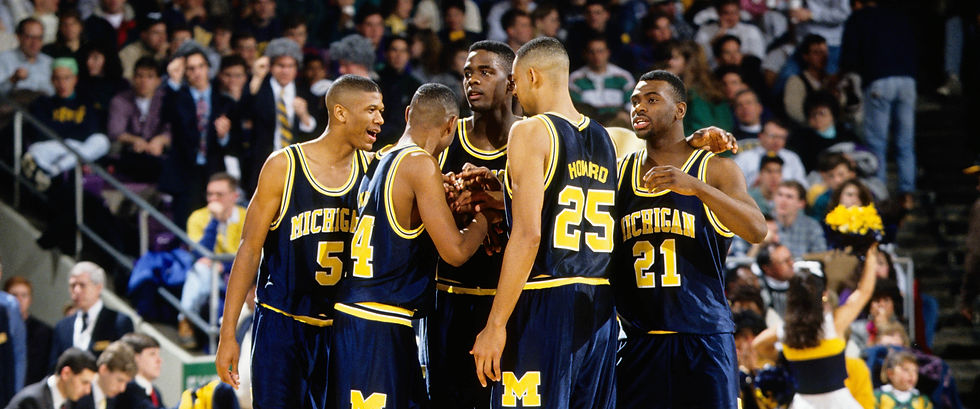
The protest that Livers and his coach Howard performed are similar, but the #NotNCAAPorperty protest feels tangible, modern, and at the forefront of the mind of the power brokers at all levels of the landscape. It was organized effort by the athletes across multiple universities, and the players have clear and concise demands. Those demands include a meeting with NCAA president Mark Emmert, the implantation of a NCAA rule that allows student-athletes to seek representation and profit off their name, image, and likeness by July 1st, a meeting with legislators at all levels to secure the passing of laws that protects athletes in multiple senses, and a final Supreme Court ruling on NCAA v. Allston that denies the NCAA power over players (Bleacher Report). One of those demands was met this past week, as Mark Emmert met with athletes for 50 minuets this past week, but the reaction to the meeting leaves the issue in limbo. According to Iowa guard Jordan Bohannan, the players involved in the call were left confused and “disappointed” by the responses from Emmert, as he was non-committal to providing a waiver that would allow athletes to profit on their name and image before certain states enact NLI laws on July 1st (Hawks Central).
While the players wanted concrete answers from Mark Emmert, they were only left wondering what the NCAA will do next. To be frank, the players aren’t alone in their confusion and anxiety over the NCAA’s response to NLI legislation. While the NCAA and Mark Emmert could settle this issue with a simple rule that allows players to finally make some money off their work, they’ve decided that they would rather not be involved at all, leaving it to the federal government to make a concrete decision on the matter. Those in power in the NCAA are making an already critical situation nuclear.
As sport public relations practitioners, there is only so much we can do about this issue. Sport Information Directors and secondary contacts posses minimal power and influence in the grand decisions that athletic directors, NCAA executives and state representatives make in the NLI process. But we still possess a critical role within our respective universities. While we need to ensure the goals and values of our schools are fulfilled through proper social media strategies and communication plans, the programs we work for would be nothing without our student-athletes. In a system where athletes can speak out with their social accounts and protest, we as communication professionals can guide them and make sure their protest campaigns are as good as they can be. We can also serve as a liaison between the athletes and the greater department. A divided and divisive department is detrimental to the success of everyone involved. An active and strong professional can tell the athletic director what the players are thinking, and how the department can aid those players in the future.
We are entering a new era of college athletics, and as professionals we have to be ready to adapt to an ever-changing landscape.

Comments